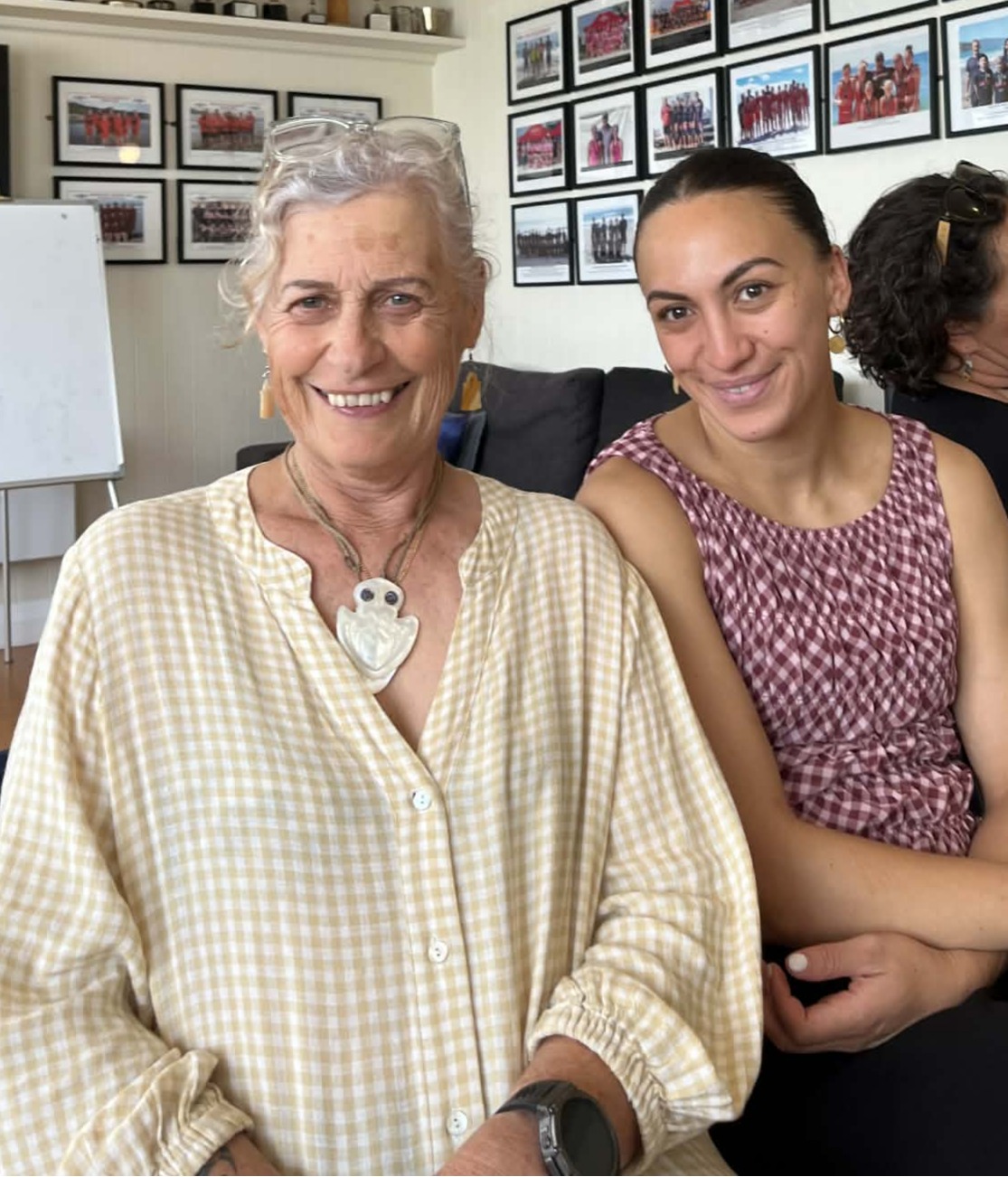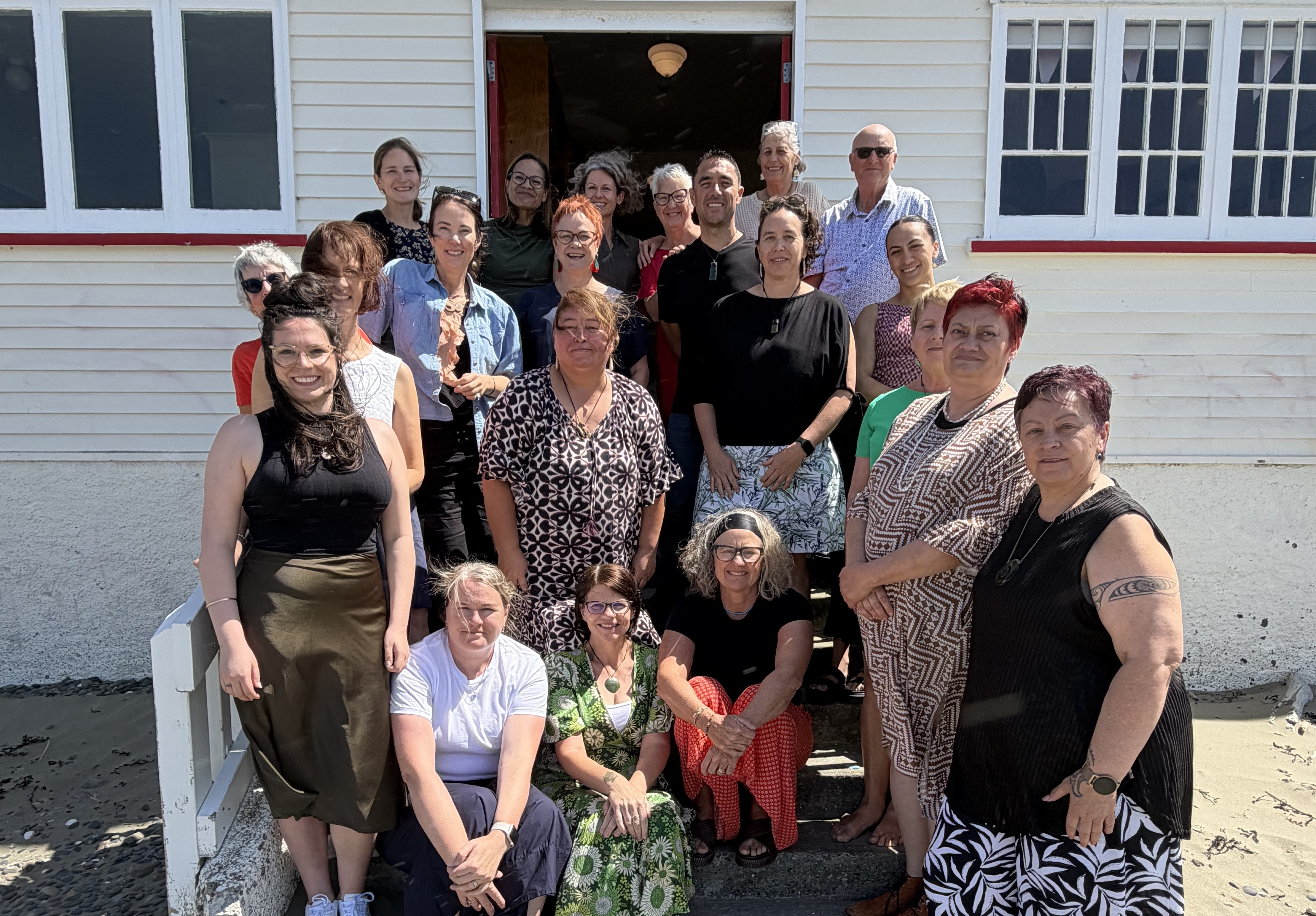

The He Waka Eke Noa research team, together with the Cancer and Chronic Conditions (C3) Research Group at the University of Otago (Pōneke), recently hosted their second hui focused on cancer related qualitative research. 21 researchers from nine organisations attended, most of whom had also participated in the inaugural 2025 hui. The gathering once again provided a supportive and creative space for sharing current research progress, exploring collective aspirations for matepukupuku related qualitative inquiry, and considering critical shifts in the research funding landscape.
The morning session, facilitated by Dr Heather Gifford, featured a series of presentations showcasing diverse Kaupapa Māori-driven approaches to improving cancer care and outcomes for whānau. Dr Heather Gifford, Gill Potaka Osborne and Lynley Cvitanovic (Whakauae Research Services Limited), outlined find results from their He Waka Eke Noa study highlighting how collaborative, whānau centred processes and a Kaupapa Māori Appreciative Inquiry (KMAI) approach are shaping meaningful primary care improvements on a single site in Whanganui. Dr John McMenamin (Health and Research Collaborative Whanganui), then spoke to the potential for comprehensive primary care teams to create early, equitable, culturally safe interventions for Māori. Cheryl Davies and Carmen Parata (Kokiri Marae and University of Otago) shared powerful digital stories from their research entitled, Meeting the Supportive Care Needs of Whānau of Māori with Cancer – Digital Storytelling offering insights into the lived experiences of whānau. Dr Nina Scott and Dr Amy Jones (Te Whatu Ora Waikato) followed with Cancer Whiri: Influencing policy and practice, emphasising the importance of culturally grounded, navigator supported models that make te ao Māori visible in cancer care.
The final presentation, delivered by Jo Clouden and Rachel Swann (cancer rehabilitation physiotherapists), highlighted the role of physiotherapy in improving outcomes for whānau Māori with matepukupuku, reinforcing the need for strong relationships, cultural safety, and integrated navigators. Jo and Rachel also wove energiser sessions into the day, maintaining focus and collective energy among participants.
The morning presentations highlighted shared themes emphasising the importance of whānau centred, whānau designed cancer care, showing that meaningful improvements occur when whānau, clinicians, and researchers work in genuine partnership. Speakers reinforced the need for culturally safe practice grounded in Kaupapa Māori methodologies and underscored the crucial role of whānau navigators across diverse initiatives, from primary care to digital storytelling and physiotherapy, who help bridge clinical pathways, support follow up, and ensure te ao Māori is visible and accessible within the health system. Overall, the kōrero affirmed that strong relationships, cultural grounding, and whānau led solutions are key to achieving equitable and effective matepukupuku care.
The afternoon session, facilitated by Dr Virginia Signal, focussed on changing policy and practice, the research funding environment, and collaborations and aspirations for future Māori cancer research. The session included a presentation by Te Aho o te Kahu (Cancer Control Agency) colleagues, Gabrielle Nicholson, Linda Williams and Isla Revell, who highlighted current developments and the investment needed to strengthen future cancer care infrastructure. Participants were also introduced to Anna-marie Ruhe, the new Hei Āhuru Mōwai Tumuaki, who discussed her priorities, upcoming funding shifts, and the 2026 World Indigenous Cancer Conference.
The final presentation, Understanding the current research funding environment delivered by Professor Jason Gurney, outlined the new research funding environment, its opportunities and challenges, and emphasised the need for creative approaches and alternative funding sources to support future cancer research.
A hui highlight for the He Waka Eke Noa research team was reconnecting with Danielle (Dani) Sword, a PhD student at the Malaghan Institute supported by Whakauae Research Services Limited. The hui offered Dani a valuable opportunity to engage with cancer researchers as she enters the final year of her studies.
Participants agreed that Te Taupuhipuhi Kairangahu Tautoko is a valuable forum for cancer qualitative researchers to connect and share their work. The hui also underscored that strong collaboration, and relationships are essential for advancing research in a rapidly changing funding environment wherein new government priorities are being instituted.