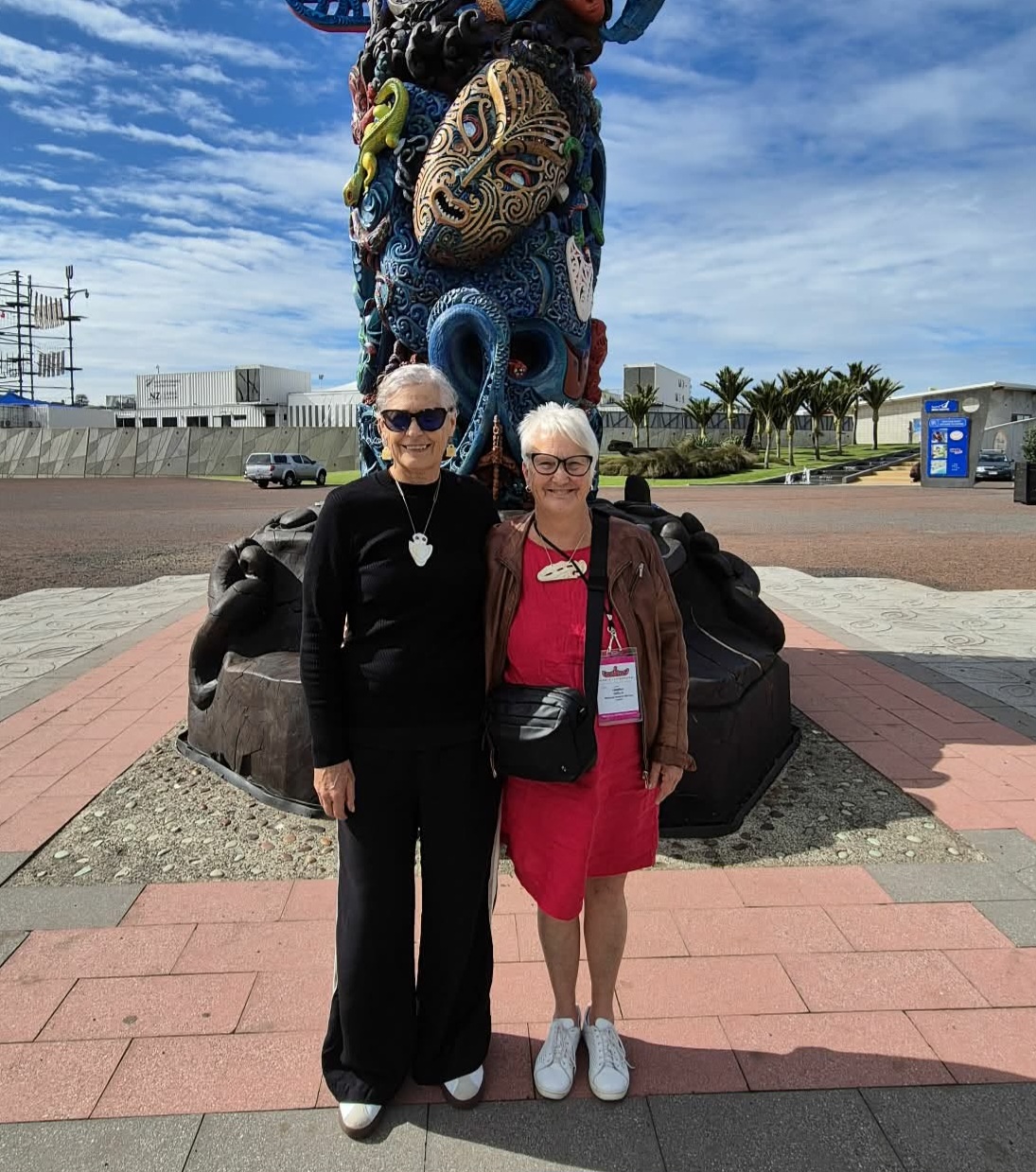

In April 2026, The World Indigenous Cancer Conference was held at Te Whare Tapere o Manukau, the Due Drop Events Centre in Tāmaki Makaurau, Auckland. The event was hosted by The World Indigenous Cancer Network and Hei Āhuru Mōwai Māori Cancer Leadership Aotearoa.
The conference was attended by over 600 researchers, clinicians, whānau, rangatahi and advocates from Australia, Canada, and Aotearoa NZ to provide an opportunity for Indigenous communities to network and reconnect. For Heather and Gill, it was a chance to present results from their research, network with those they had previously worked with and to support new and emerging researchers. A quote from an emerging researcher highlights the benefits of conferences of this nature:
A first for me at an Indigenous conference, it was very special, both grounding and uplifting and I loved the tikanga throughout the three days, especially the whanaungatanga.
The presentation from Heather and Gill, He Waka Eke Noa: Co-designing Primary Care with whānau voice, outlined what changes were required from primary health care to create culturally safe environments; potentially encouraging whānau to present earlier in their cancer journey. The three partners in the research - whānau who have been diagnosed with cancer, Gonville Health a primary care clinic in Whanganui and Whakauae Research - have in essence conducted an organisational cultural safety review and produced an action plan led by whānau voice.
A key finding that emerged, consistently and powerfully, throughout the He Waka Eke Noa study is the centrality of relationships for whānau and for primary care staff. This research supports the understanding that whanaungatanga is not simply part of a consultation; it is the foundation of whānau feeling connected to health services.
Presenters repeatedly emphasised the importance of building meaningful relationships, fostering trust in health systems, and feeling connected to services that work for us as Indigenous people. Prompted by the lack of significant progress in health system change, despite clear evidence repeated endlessly by many over the last twenty-five years, Heather used the presentation time to challenge the audience as researchers, policy makers and advocates to think about how research is created and used as a tool for change.
Heather and Gill were also able to support presentations from colleagues that they have worked with in the Māori cancer research space over the last four years. These included: Danielle Sword’s “Improving CAR T-cell cancer therapy for Māori in Aotearoa New Zealand”, describing how tikanga can be woven through laboratory practices. Jason Gurney bringing quantitative data to life in “Lung Cancer and Māori”, to highlight stark inequities for Māori in access to, and outcomes from, lung cancer treatment; and also Virginia Signal, Cheryl Davies and Julie Cooper presenting on H. pylori screening and treatment research results.
A particular highlight was Rachel Swann (an emerging Māori researcher) being recognised with an award for her poster “Prioritising physiotherapy rehabilitation for Māori with matepukupuku”. We also appreciated the chance to reconnect with Professor Jacquie Kidd, who we are collaborating with on a paper about the importance of whānau voice in cancer care.
All these above-named researchers are members of Te Taupuhipuhi Kairangahu Tautoko Collective, an informal network of HRC-funded Māori cancer research projects, facilitated by the University of Otago and Whakauae Research. We gather to share kōrero, reflect and strengthen research practice.
.jpg)